5.2. Community and resident engagement
Define the 'social infrastructure' of the project
ALPHA
Section objective
To define the 'social infrastructure' of the project. This section shows how the council positions themselves as a trust broker between the supply chain and the residents. By organising the community beforehand, the council reduces 'customer acquisition costs' for installers and prevents project delays caused by local opposition.
The value to stakeholders
Lower sales costs: when the council and local charities identify resident interest and provide impartial advice, installers spend less time on cold leads and more time on high-probability installations.
Access to 'bulk' customers: coordination with social housing providers gives the supply chain access to hundreds of properties via a single decision-maker, allowing for large-scale orders and lower operational overheads.
Reduced planning risk: by requiring 'best-practice engagement' from stakeholders, the council ensures that residents in sensitive areas are prepared for the temporary disruption, reducing the risk of mid-project complaints or access refusals.
What to include in this section
To make this a functional tool, the council should outline the specific engagement mandates they expect the supply chain to follow.
The 'trusted messenger' network: list the local charities, energy advice hubs, and social landlords the council will work with to bridge the gap between technical installers and residents.
Evidence requirements: define what 'good' looks like, mandate that partners provide evidence of working with complex housing (eg, historic or dense terraces) and high resident satisfaction.
The resident-centric mandate: state that the supply chain must move from 'general awareness' to 'one-to-one home assessments' and jargon-free recommendations for residents.
Feedback loops: describe the shared mechanism for capturing resident feedback to refine the technical delivery throughout the clean heat plan rollout.
Example text
This box below includes a pre-written section that can be filled in with information relevant to your chosen area.
In addition to the technical data above, we hope to implement an early engagement strategy designed to build on this strategic analysis and drive towards market readiness. We understand that building confidence and trust is a critical factor for successful resident uptake, and we would expect our partners to actively contribute to this goal. As for initial engagement, targeting neighbourhood clusters could build visibility and confidence in the area before wider future rollout.
Our Council-led engagement strategy includes:
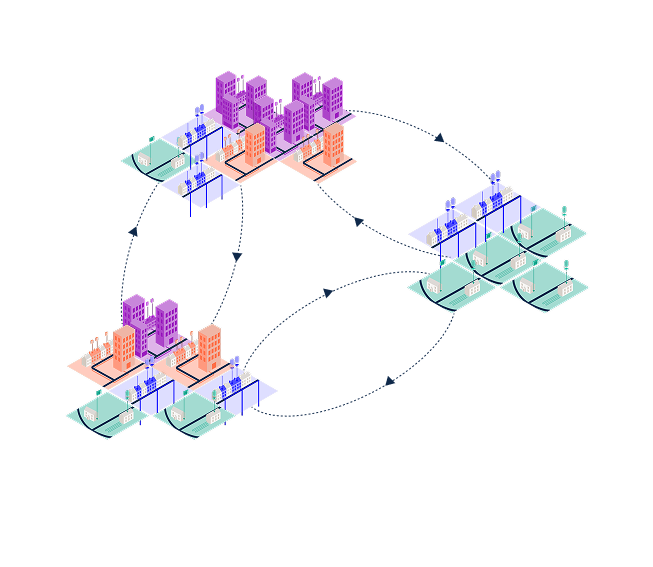
OUTLINES STRATEGY (e.g., Council-led direction setting, Council-led co-ordination, Impartial advice & qualification, Social housing coordination) (See Plymouth example).
Engagement activity and resident experience could be closely coordinated through shared feedback mechanisms between the Council, local energy advice charities, social housing associations, and delivery partners. This would ensure a managed and continuous improvement process throughout the programme.
There are several community organisations operating in AREA with active community support services, local meeting spaces and social media channels signposting the community to local activities and resources. The two main groups include LIST OF ACTIVE COMMUNITY GROUPS.
To maintain the trust of AREA community, all partnering stakeholders and supply chain partners must demonstrate an uncompromising commitment to best-practice community engagement and consultation, with a specific focus on a just and inclusive transition for local residents.
1. Evidence of prior engagement success
Delivery partners must prove their capability to integrate the needs of a highly localised area like AREA into project execution. This requires:
Successful track record: Partners would be expected to provide concrete evidence of previous successful engagement campaigns, particularly in areas with similar housing characteristics (e.g., COMMON HOUSING TYPE properties common in AREA), detailing the methodologies used and measured outcomes in resident satisfaction.
Proactive information sharing: Demonstrating a history of transparent and proactive communication that goes beyond statutory minimums, ensuring AREA residents are informed at every critical stage, and addressing specific local concerns (e.g., parking, access, historic property considerations).
2. Mandatory consultation and compliance
All project planning must rigorously accommodate and exceed necessary resident consultation requirements, especially for social housing providers operating within AREA, to ensure project legitimacy and a just transition. This includes:
Statutory compliance assurance: Providing assurance that all project plans fully comply with, and ideally enhance upon, required consultation frameworks relevant to COUNCIL NAME and social housing partnerships.
Inclusive transition planning: Developing tailored consultation strategies that specifically address the needs of all residents, ensuring accessibility of information and providing ample opportunity for feedback that directly influences project design, with particular outreach to elderly residents and those in high-density accommodation like converted buildings or terraced housing.
3. AREA resident-centric engagement mandate (heating technologies)
To effectively deliver the proposed clean heat plan, the supply chain is mandated to undertake a highly focused, resident-centric engagement campaign designed to overcome knowledge barriers and facilitate informed decision-making regarding new heating technologies within AREA.
This mandate requires delivery partners to:
Technology awareness & education: Conduct proactive awareness campaigns specifically targeting AREA neighbourhoods to educate residents on the range of available low-carbon heating technologies (e.g., heat pumps, communal and networked solutions, or other necessary home upgrades).
Tailored guidance and recommendations: Move beyond general information to provide one-to-one, house-specific consultations with residents. This includes:
Home assessment: Conducting basic assessments to understand the suitability of different technologies based on the individual house's structure, current insulation, and energy usage profile.
Bespoke recommendations: Providing written, jargon-free recommendations that clearly outline the proposed technology, expected performance, potential disruption during installation, and long-term costs/savings specific to a home in AREA.
Feedback integration: Establishing a formal mechanism for capturing resident feedback on the proposed technologies and using this data to refine and localise implementation strategies, ensuring community acceptance is central to project acceleration within AREA.
The example from Plymouth
Sign up to hear more
We are a building a network of areas, suppliers and community groups interested and working across low-carbon heat.
Sign up here if you would like to be notified about updates and opportunities to collaborate.