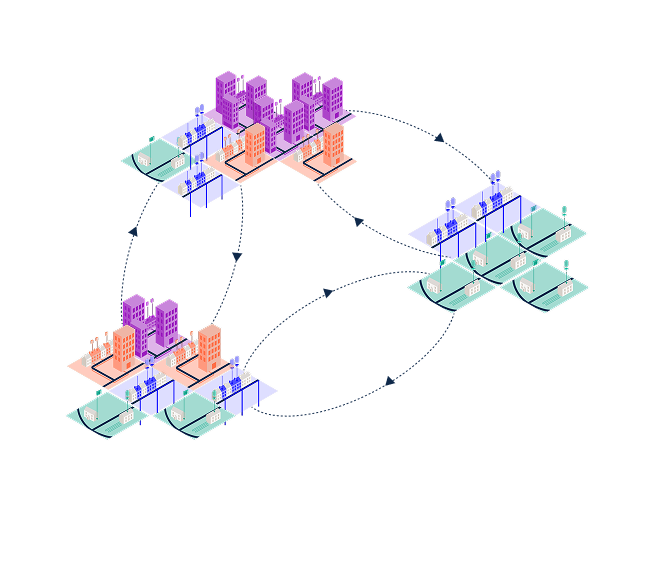
Household plan: online design guide (page one)
Recommendations on what to communicate on page one of the online design guide
ALPHA
Page one: set the scene
Aim: Ensure residents understand why home heating is changing, who is leading the work and what the wider purpose of the plan is before moving to information tailored to their home.
What page one should communicate
The page should establish why home heating matters in everyday life, including its impact on comfort, health, household costs and local air quality.
It should clearly state that the work is being led by the local authority and explain why residents are receiving this information.
It should explain why heating systems are changing nationally and locally, and why the local authority is exploring clean heating options in the area.
It should introduce clean heating at a high level, explaining that different technologies may be suitable for different types of homes.
It should describe the intended benefits for both individual homes and the wider neighbourhood.
It should make clear the purpose of the plan is to provide trusted information, local support and clear oversight over time, and that households are not being asked to make any decisions at this stage.
It should also clarify that different homes and tenures will require different approaches and prepare residents for the next step of receiving tailored information.
The purpose of this page: ensure that residents understand the context, leadership and rationale behind the work before moving to information tailored to their home.
Online guide prototype | Clean heat neighbourhoods playbook
Cookie consent is required to display this video. Click "Load video" to consent (this time only).
Manage your cookie preferences in the bottom left corner.
Page breakdown
The sections below illustrate how page one communicates this in practice.
Who this is from
1
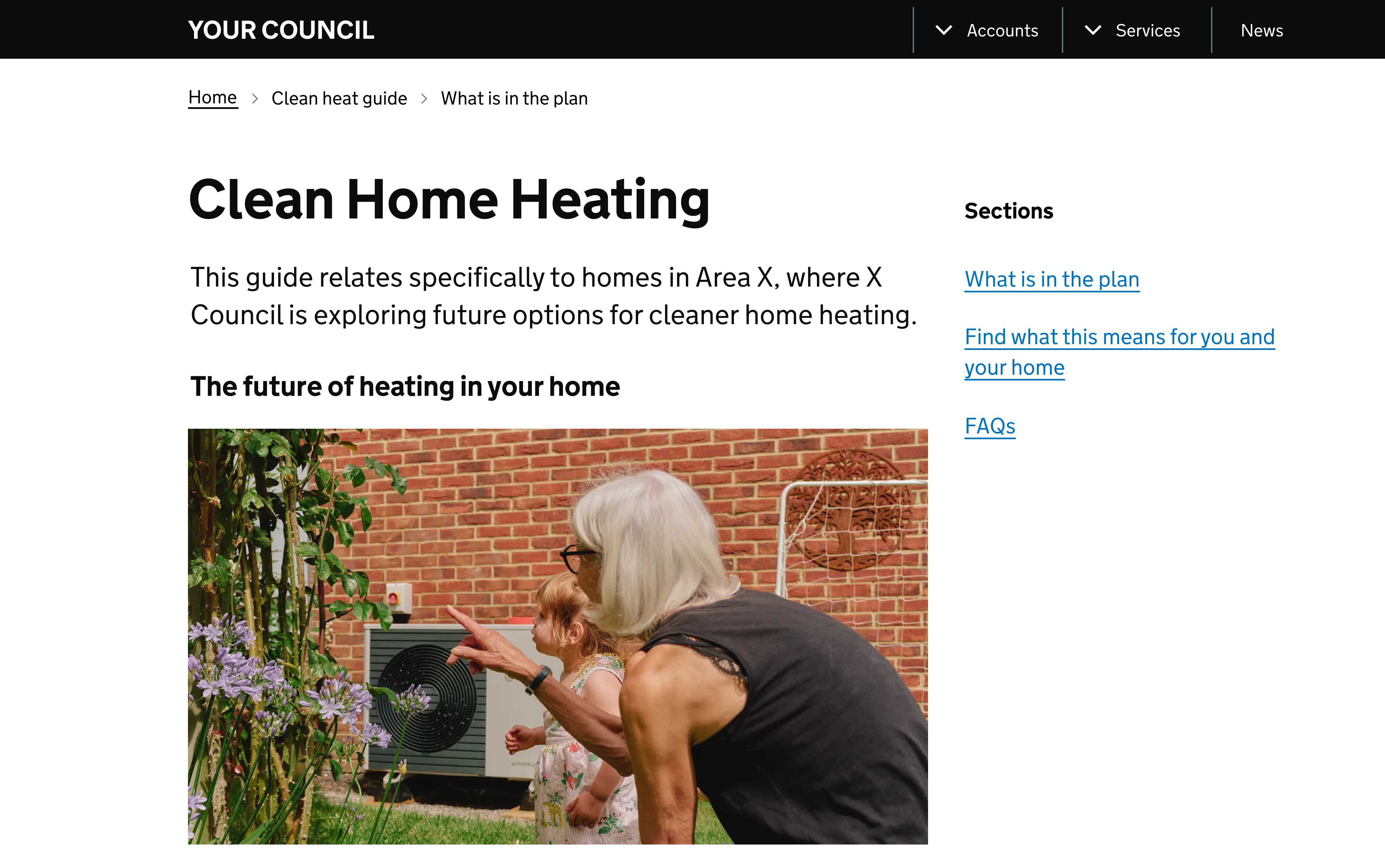
The page should clearly position the work as council-led. It should state that the guide relates specifically to homes in a certain area and that the council is exploring future options for cleaner home heating. This distinguishes the plan from installer-led marketing or national campaigns and establishes the local leadership from the outset.
Example
Why this conversation is happening now
2
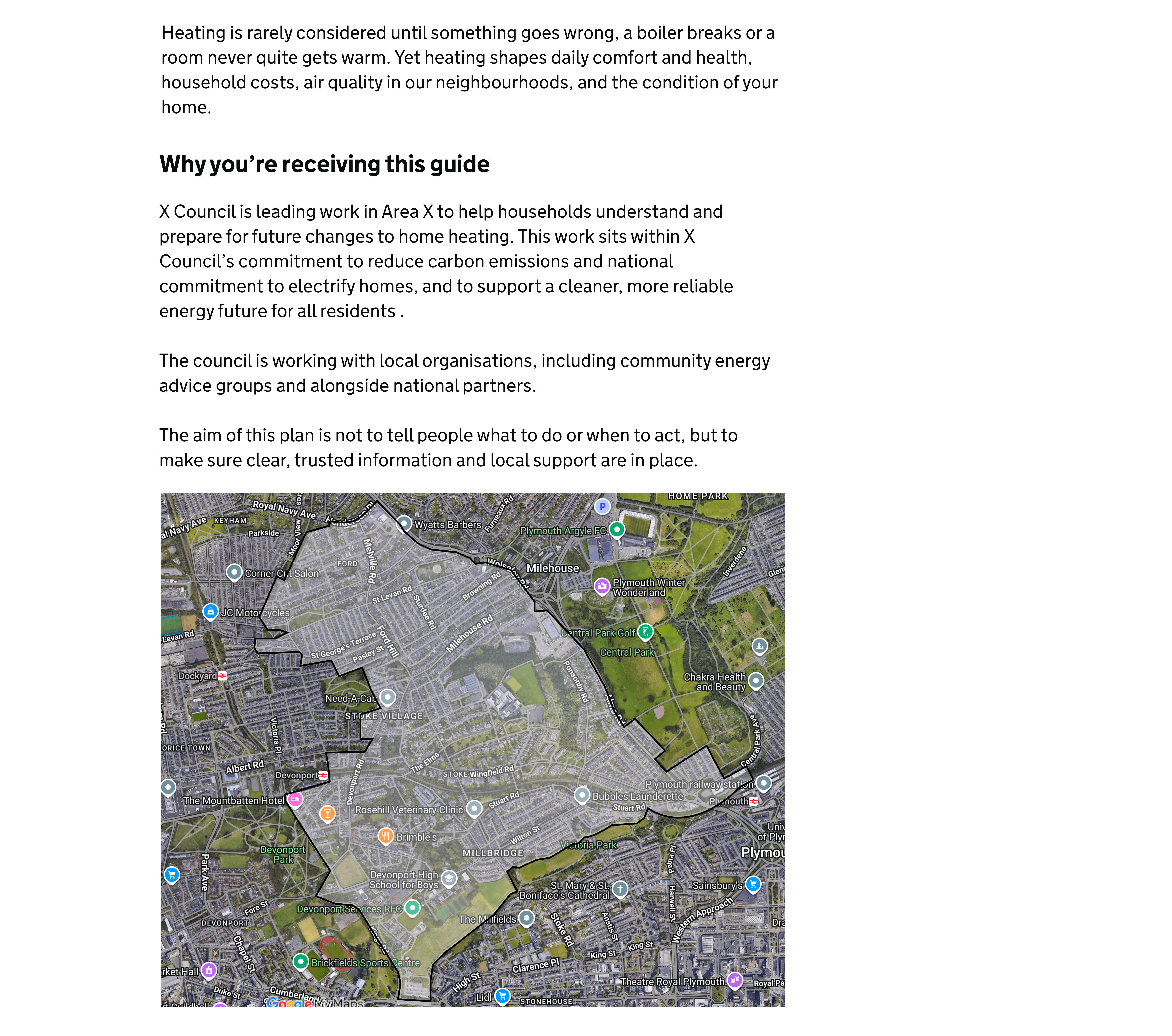
It should establish why heating matters in everyday life and explain why residents are receiving this guide. The work should be positioned within the council’s wider commitments and national changes in home heating, while making clear that the aim is to provide trusted information and support rather than direct immediate action.
Example
Why heating is changing
3
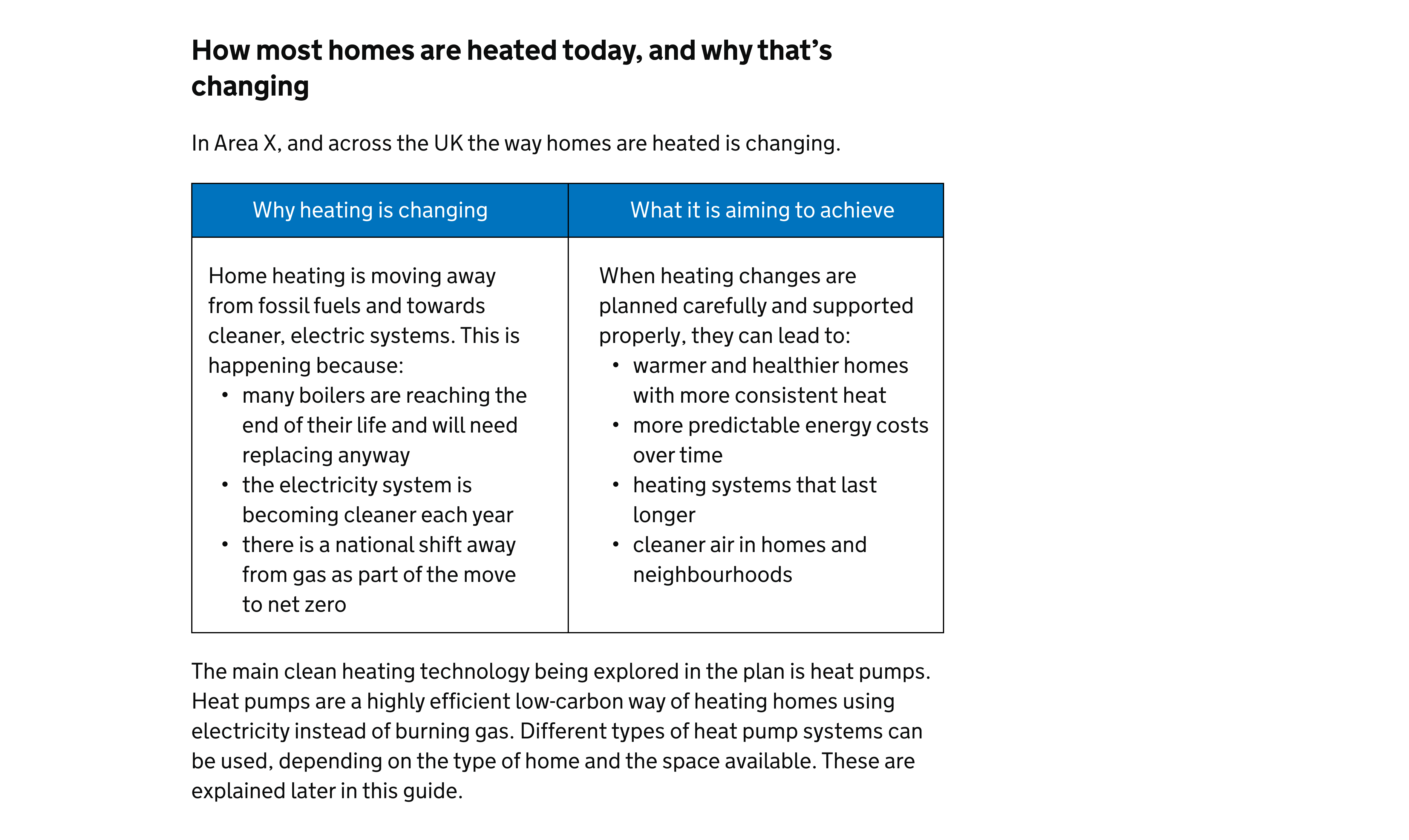
It should explain the wider shift away from fossil fuels and towards electric systems in practical and recognisable terms. This includes ageing boilers, cleaner electricity and the national move away from gas. The intended outcomes of the shift should be clearly set out. The technology being explored should be introduced in simple terms.
Example
Home and neighbourhood benefits
4
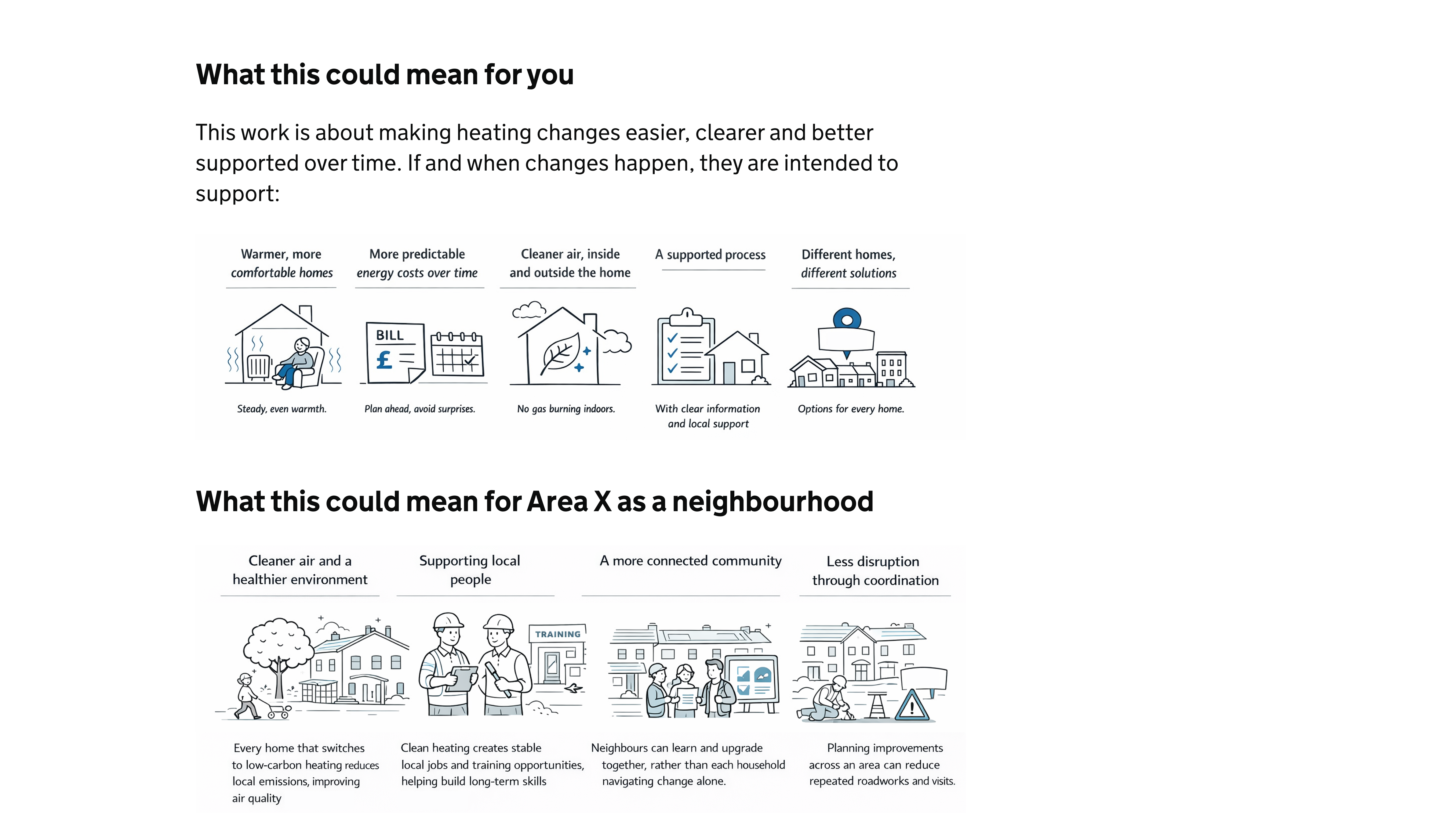
It should make explicit how changes to home heating are intended to improve individual homes - such as better comfort and health, while also delivering wider benefits for the neighbourhood - including cleaner air, local jobs and better coordination across the area.
Example
What the plan aims to do over time
5
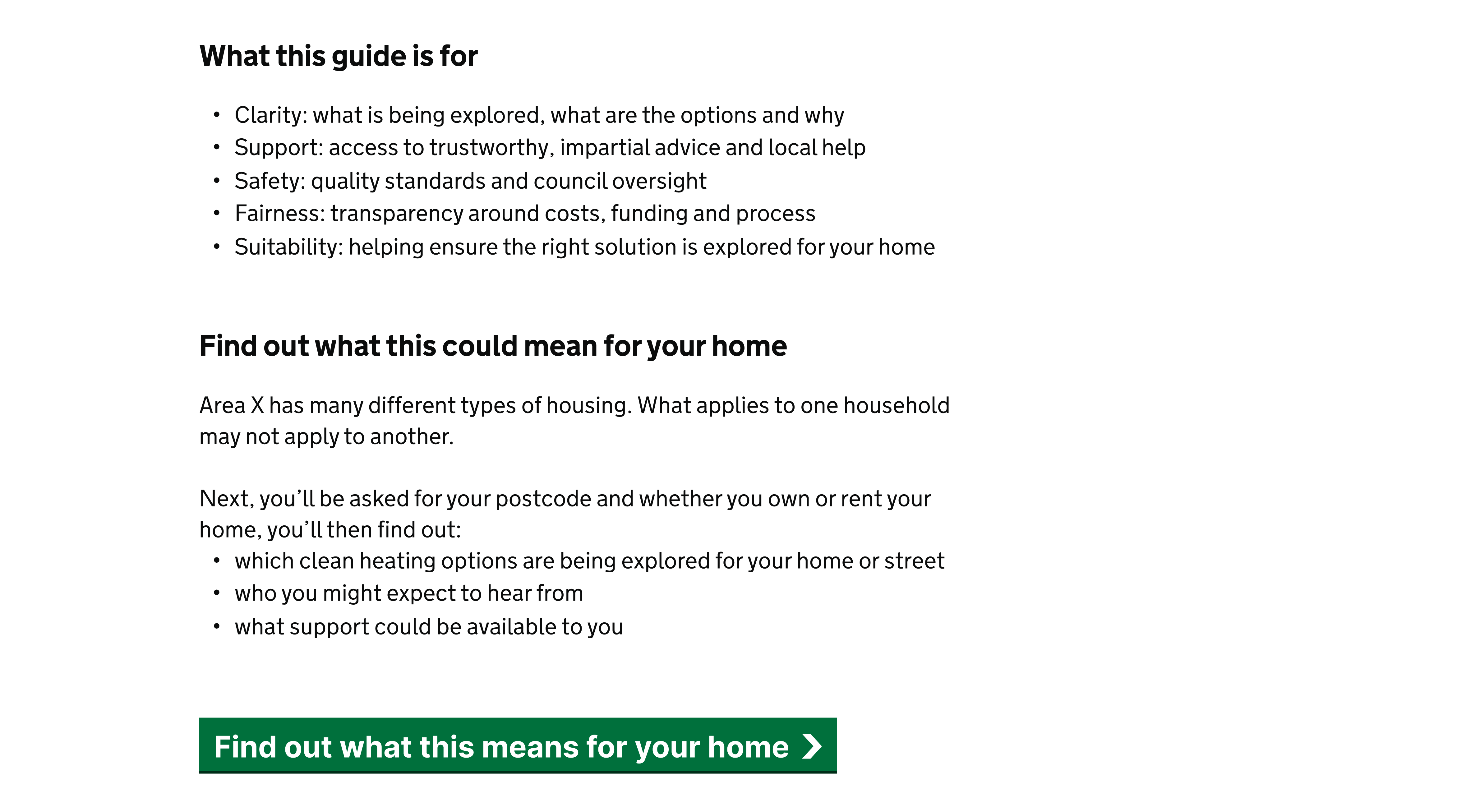
It should explain how residents will be supported through clear information, access to local advice and support and a coordinated approach that reflects different housing types and tenures.
It should also introduce, at a high level, that different homes may require different clean heating approaches and prepare residents for the next step of entering their details to receive tailored information.
Example
Sign up to hear more
We are a building a network of areas, suppliers and community groups interested and working across low-carbon heat.
Sign up here if you would like to be notified about updates and opportunities to collaborate.