Household plan: online design guide (page three)
Recommendations on what to communicate in page three of the online design guide
ALPHA
Page three: present personalised, relevant advice
Aim: ensure households understand what clean heating option is being explored for homes like theirs, what that option involves in practical terms, what their role is and what they can do next.

Unlike pages one and two, page three is a tailored page. The information shown changes depending on the household’s postcode and tenure. This means the clean heating option presented, the explanation provided and the engagement routes shown will vary depending on the technology being explored in that area and whether the resident owns or rents their home.
What page three should communicate
Page three should provide information that is tailored to the household’s postcode and tenure.
It should clearly explain which clean heating option is being explored for homes like theirs and describe what that option involves in everyday terms.
It should explain why that option is being explored in their area, linking this to recognisable characteristics such as housing type, street layout and available space.
It should clarify what engagement looks like for someone in their situation, distinguishing between owner-occupiers, private renters and social housing tenants.
It should outline what households can expect if the plan develops, including who they would hear from and how changes typically unfold over time.
It should make visible the actions households can take if they wish to engage. These may include speaking to a local advice service; registering interest; joining an area-based scheme; contacting installers; or raising questions with a landlord or housing provider, depending on tenure.
It should signpost to trusted sources of further information, local advice and support.
Where relevant, it should also clarify that the identified option is not necessarily the only option that could work for their home.
The purpose of this page: move from general explanation to practical, situation-specific clarity. It should leave households able to answer five questions:
1. What is being explored for homes like mine?
2. Why this option?
3. What does it involve in practice?
4. What is my role?
5. What can I do next?
We are also keen to explore how the plan can better work for landlords and tenants. In particular, we would like to understand what landlords would need to see in a plan like this, and what resources tenants might need to help share information with their landlords. If you have any advice, examples, resources, or projects we should look at, we would be very interested to hear about them.
Contact us at cleanheatneighbourhoods@nesta.org.uk
Example tailored pages
The video below shows three example versions of page three, demonstrating how content changes depending on the clean heating option being explored and the household’s tenure:
1. Individual heat pump + owner occupier
2. Networked heat pump + private renter
3. Communal heat pump + social housing tenant
These examples illustrate how the structure of the page remains consistent, while the explanation, responsibilities and engagement routes adapt to the household’s situation.
Online guide prototype: page three | Clean heat neighbourhoods playbook
Cookie consent is required to display this video. Click "Load video" to consent (this time only).
Manage your cookie preferences in the bottom left corner.
Page breakdown
In the breakdown below, we use the networked ground source heat pump + private renter example to illustrate how page three communicates the key information in practice.
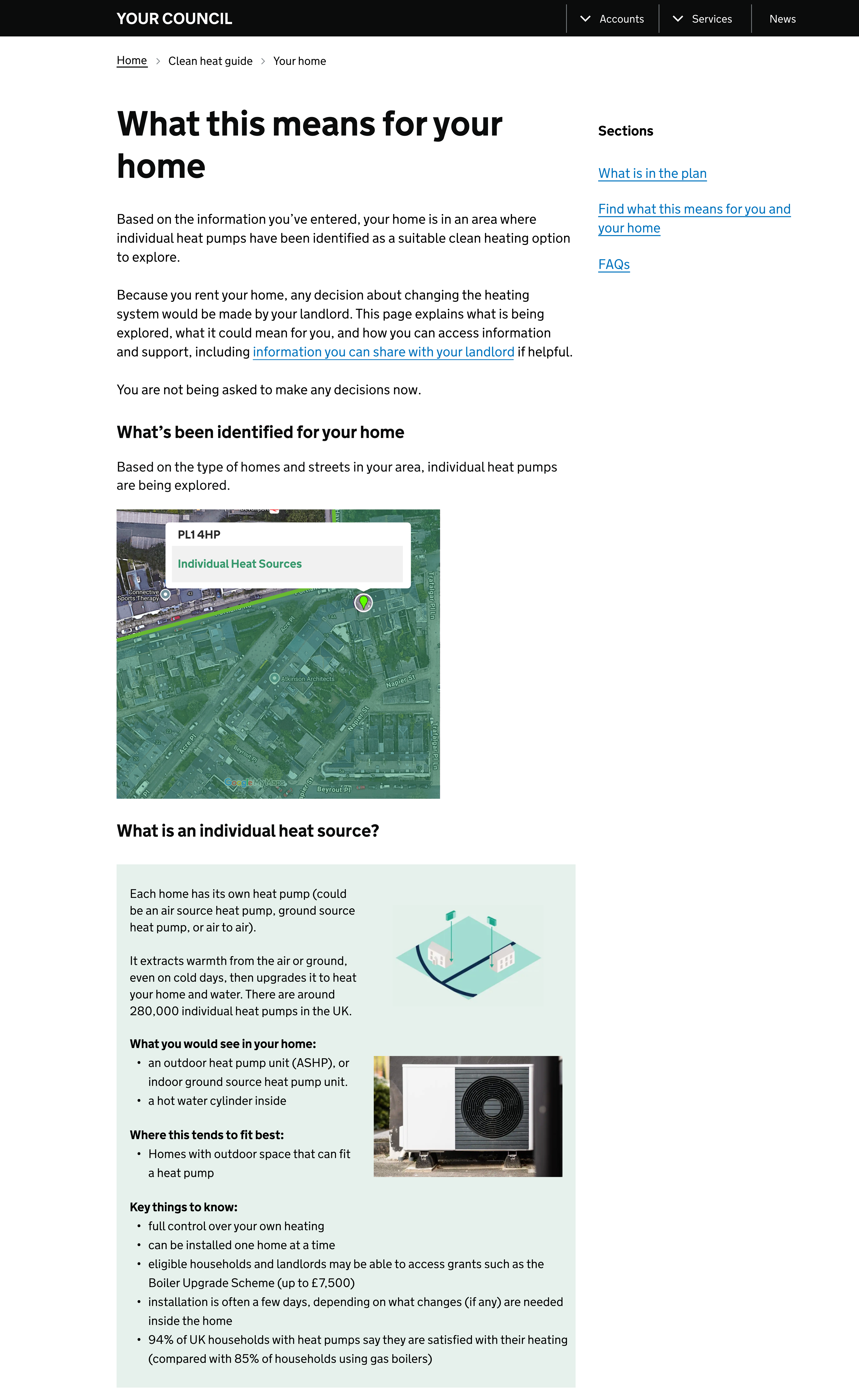
What clean heating option is being explored and what it involves
1
This should explain which clean heating option is being explored for homes like theirs and explain what that option is in practical terms.
This explanation should focus on helping people understand what the system does and what it would mean for their home, rather than how the technology works in technical detail. Useful information to include would be: an explanation of what the system does in plain language; what equipment someone would see in their home; whether there is any equipment outside the home, underground, or shared with others; and where this type of system tends to fit best.
Example
Trusted places to learn more
2
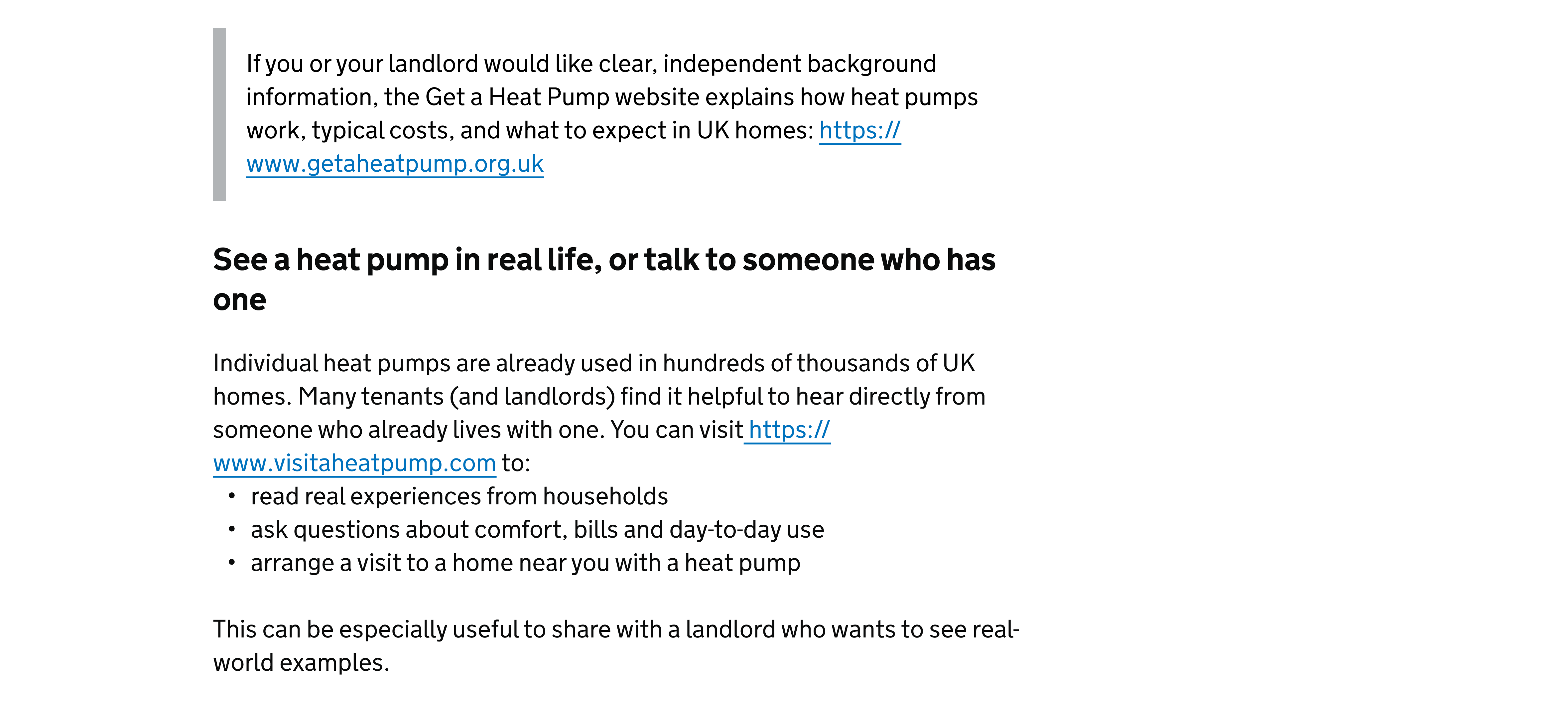
We think it should signpost households to trusted places to go next. This includes:
- pointing to independent background information (such as the Get a Heat Pump website),
- ways to see examples or speak to households already using heat pumps (such as Visit a Heat Pump),
- trusted local advice services, and, for renters, a landlord-tenant information pack they can choose to use if conversations arise.
Example
Why this option is being explored in your area and what it means for you
3
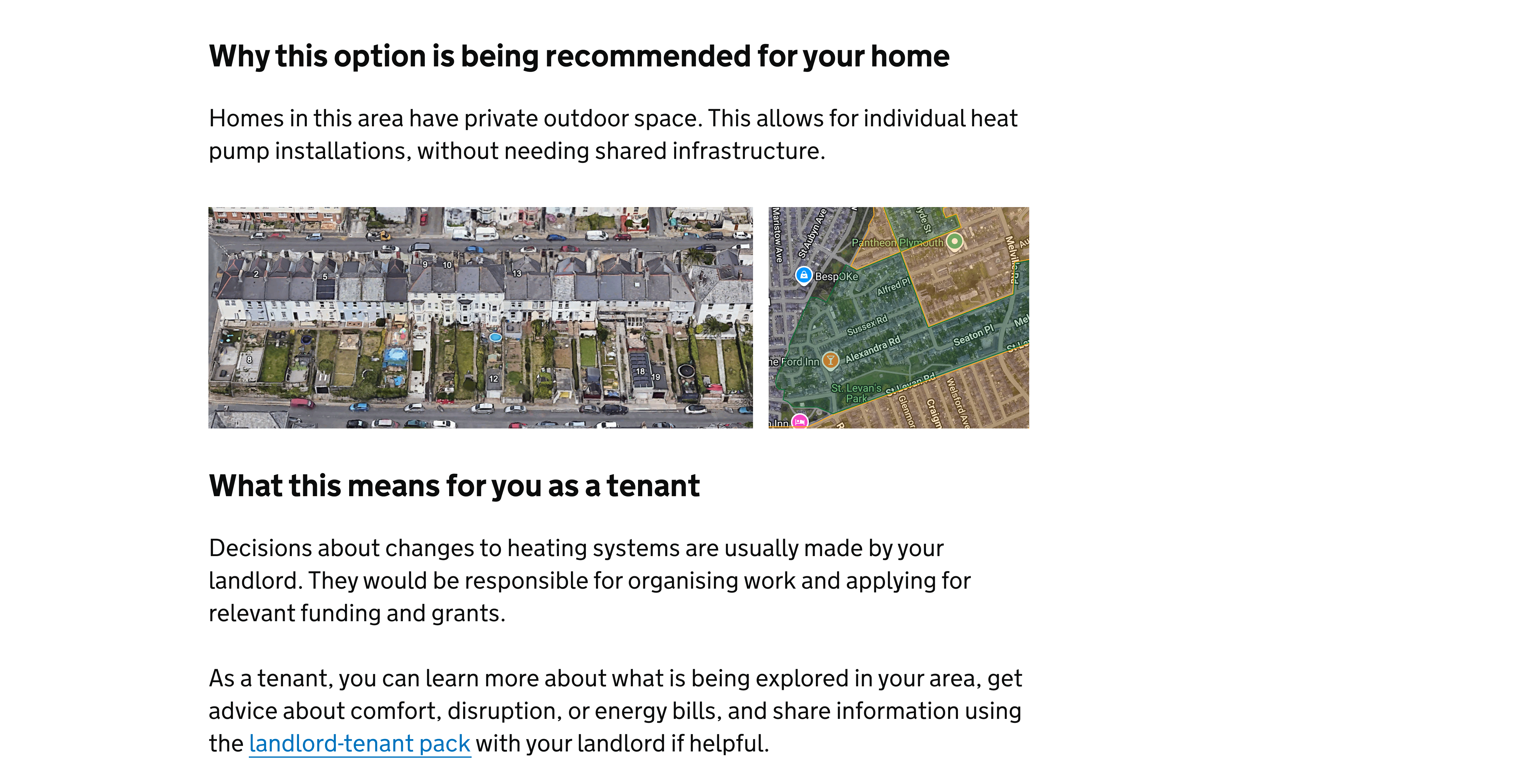
This should explain why that option is being explored in their area. This explanation should link directly to characteristics like housing type and available space, rather than technical modelling.
It should also explain how the resident’s tenure shapes their role. For example, tenants may be informed that decisions about heating upgrades are typically made by landlords or housing providers.
Example
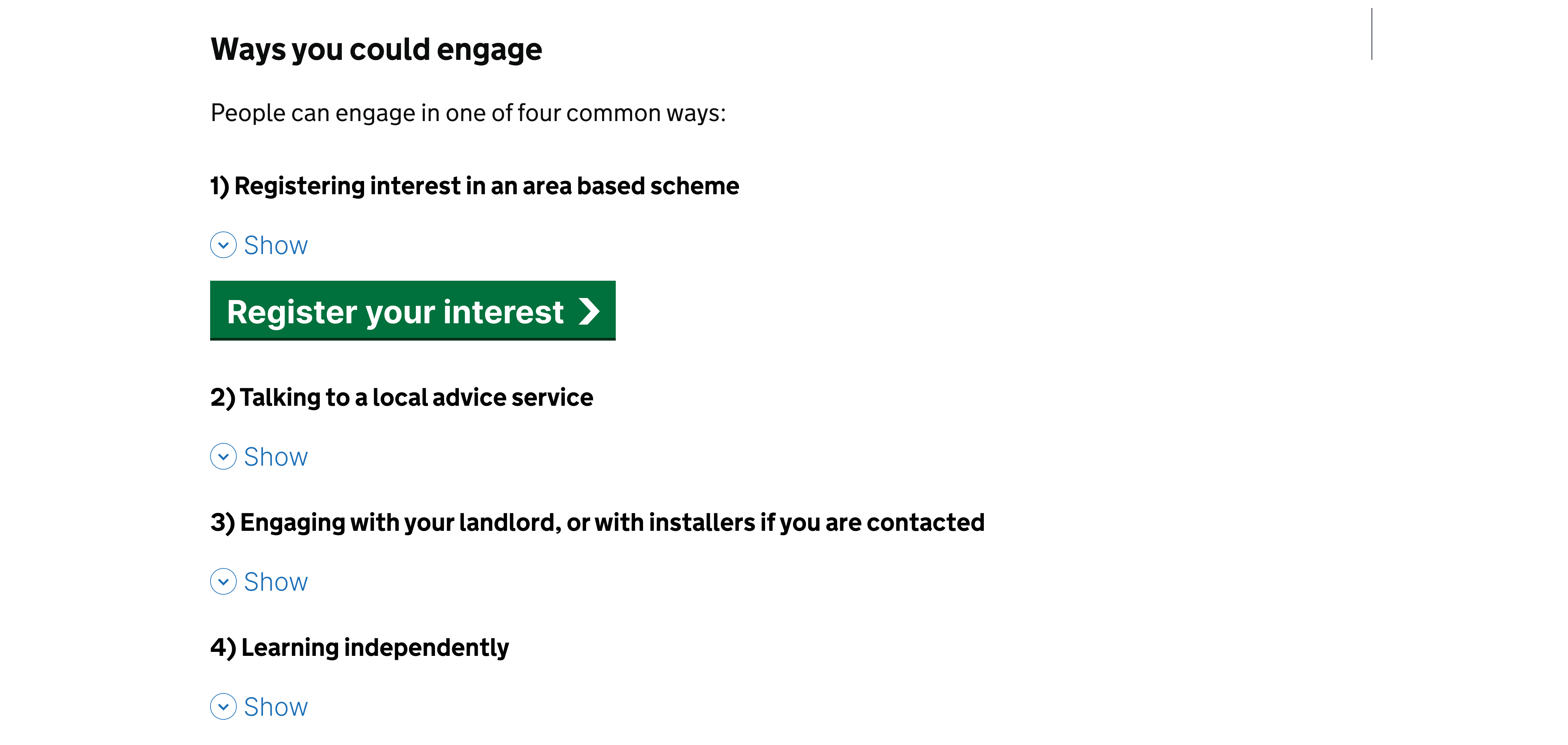
What engagement looks like for someone in your situation
4
This should explain what resident engagement looks like for someone in their situation and this needs to differ by tenure.
For owner-occupiers, this can include routes such as speaking to a local advice service; contacting an installer; joining an area-based scheme; or exploring installation independently, enabling an end-to-end journey if they choose.
Example
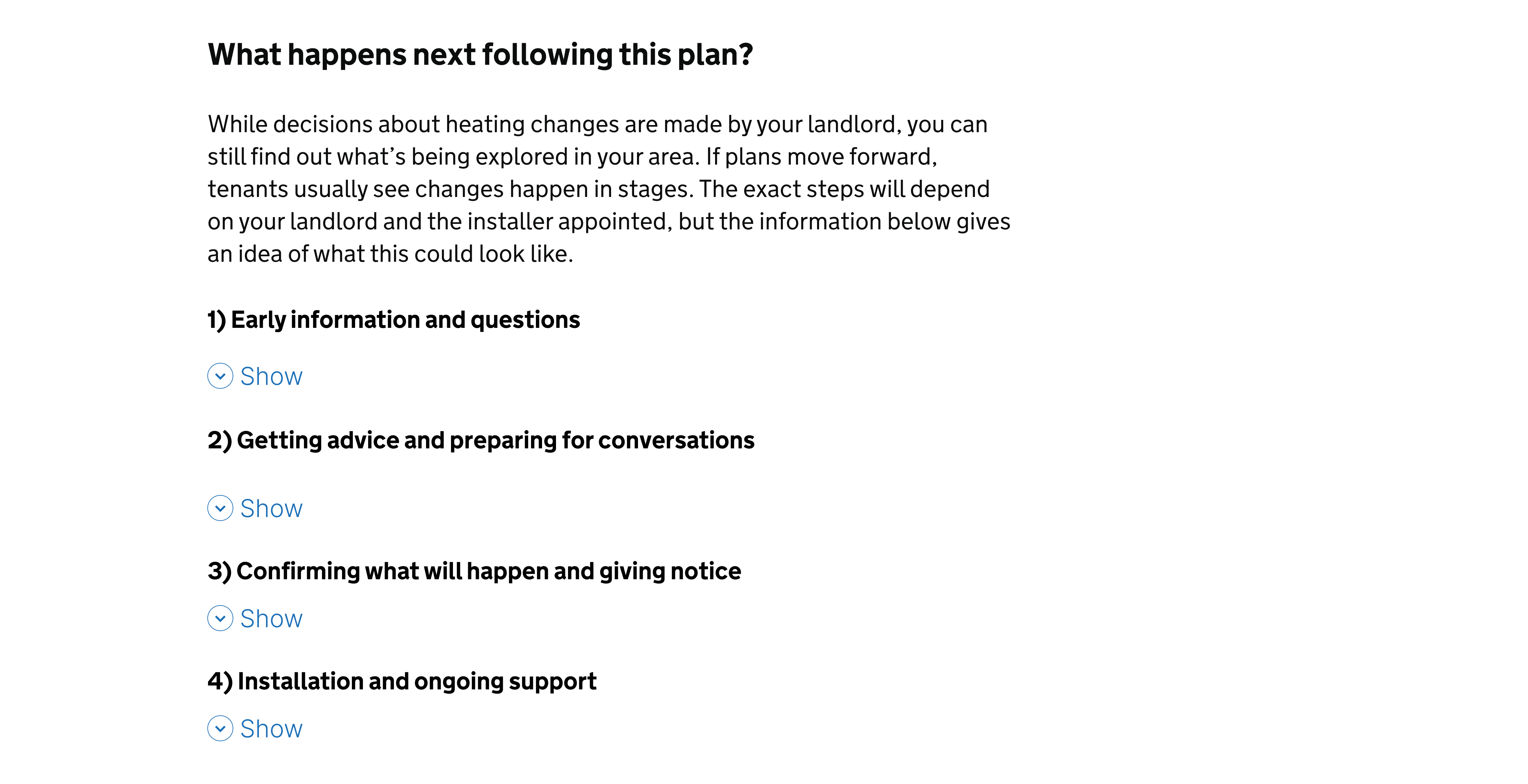
What could happen next
5
This should explain what households can expect if the plan develops. This should give a clear sense of how the journey may unfold over time, helping residents understand what typically happens between early exploration and potential installation.
This may include outlining stages such as early information and updates from the council; further explanation of options; confirmation of proposals if plans progress; and installation and aftercare where relevant.
Within this explanation, the page should clarify who residents might expect to hear from at different stages. For example, early communication may come from the council, while later communication may come from landlords, housing providers, installers, or scheme operators, depending on the tenure and the option being explored.
Example
Where relevant, the page should clarify that the option being explored for the area is not necessarily the only option that could work for a home. Some properties may have characteristics that allow alternative heat pump types. The service can briefly acknowledge this and signpost residents to trusted sources if they or their landlord wish to explore alternatives.
Example

Sign up to hear more
We are a building a network of areas, suppliers and community groups interested and working across low-carbon heat.
Sign up here if you would like to be notified about updates and opportunities to collaborate.