Household plan: leaflet one guide
Recommendations on how to communicate advice in leaflet one sent to households
ALPHA
Leaflet one: Give personalised, relevant advice
Aim: to explain which clean heating option is being explored for homes in the recipient’s area and what that option involves in practical terms. It follows the initial council letter and moves from shared context to area and home-specific guidance.
The purpose of this leaflet is to ensure that households can clearly answer two questions:
What option is being explored for homes like mine?
What does that technology involve in practice?

This leaflet is personalised by location. Households receive information based on postcode, reflecting the clean heating option being explored for homes in their area.
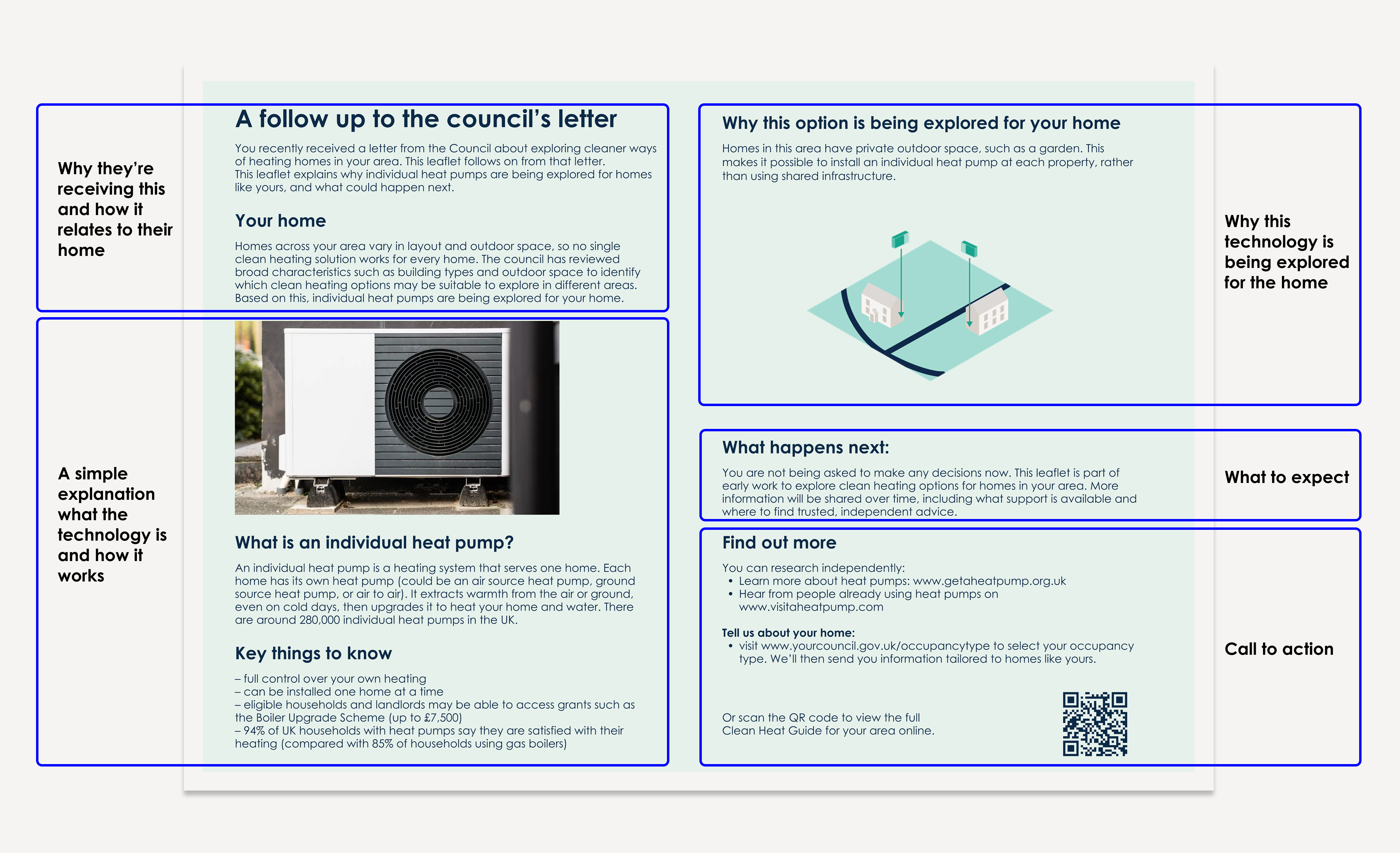
What the leaflet should communicate
1
Why they’re receiving this and how it relates to their home
The leaflet should make clear that homes across the area differ in layout, density and available outdoor space, meaning a single solution is not suitable everywhere. Using broad and observable characteristics, such as building type and space constraints, the council has identified which option is appropriate to explore in each location. It should clearly state which technology is being explored for the recipient’s home.
2
Why this technology is being explored for the home
It should explain why that option has been identified. The reasoning should be grounded in recognisable and visible features, such as the presence of private outdoor space, higher-density housing, shared buildings or limited room for external equipment, rather than technical modelling. For example, some homes may support an individual system due to adequate outdoor space, while others may be better suited to shared or networked approaches because of building layout or proximity to neighbouring properties.
3
A simple explanation of what the technology is and how it works
It should describe what the identified technology is in simple, everyday language. This includes explaining what the system does; where equipment would typically be located; whether anything would be inside, outside or underground; and whether the system is individual or shared. Where relevant, the leaflet should clarify what shared infrastructure means in practice to avoid confusion.
The leaflet should also include a short section detailing key things to know. This may cover practical points such as efficiency, whether systems can be installed one home at a time or require street-by-street coordination, likely cost considerations, eligibility for grants and levels of satisfaction among existing users.
4
What to expect
Households should understand that they are not being asked to make any decisions at this stage and that this leaflet forms part of early exploratory work. It should explain that further information will follow as the work develops.
5
Call to action
The leaflet should provide clear routes for finding out more. This may include signposting to independent information sources, such as get a heat pump website explaining how different heat pumps work, opportunities to hear from households who already have one installed through visit a heat pump website, and the full online clean heat guide for the area. It should also invite residents to confirm their occupancy type, so that further information can be tailored appropriately.
Example prototypes
Below are illustrative examples showing how leaflet one could be presented for different clean heating options.
Each prototype reflects the same structure and communication principles described above, adapted to a specific technology:
1. Individual heat sources
2. Networked heat pumps
3. Communal heat source
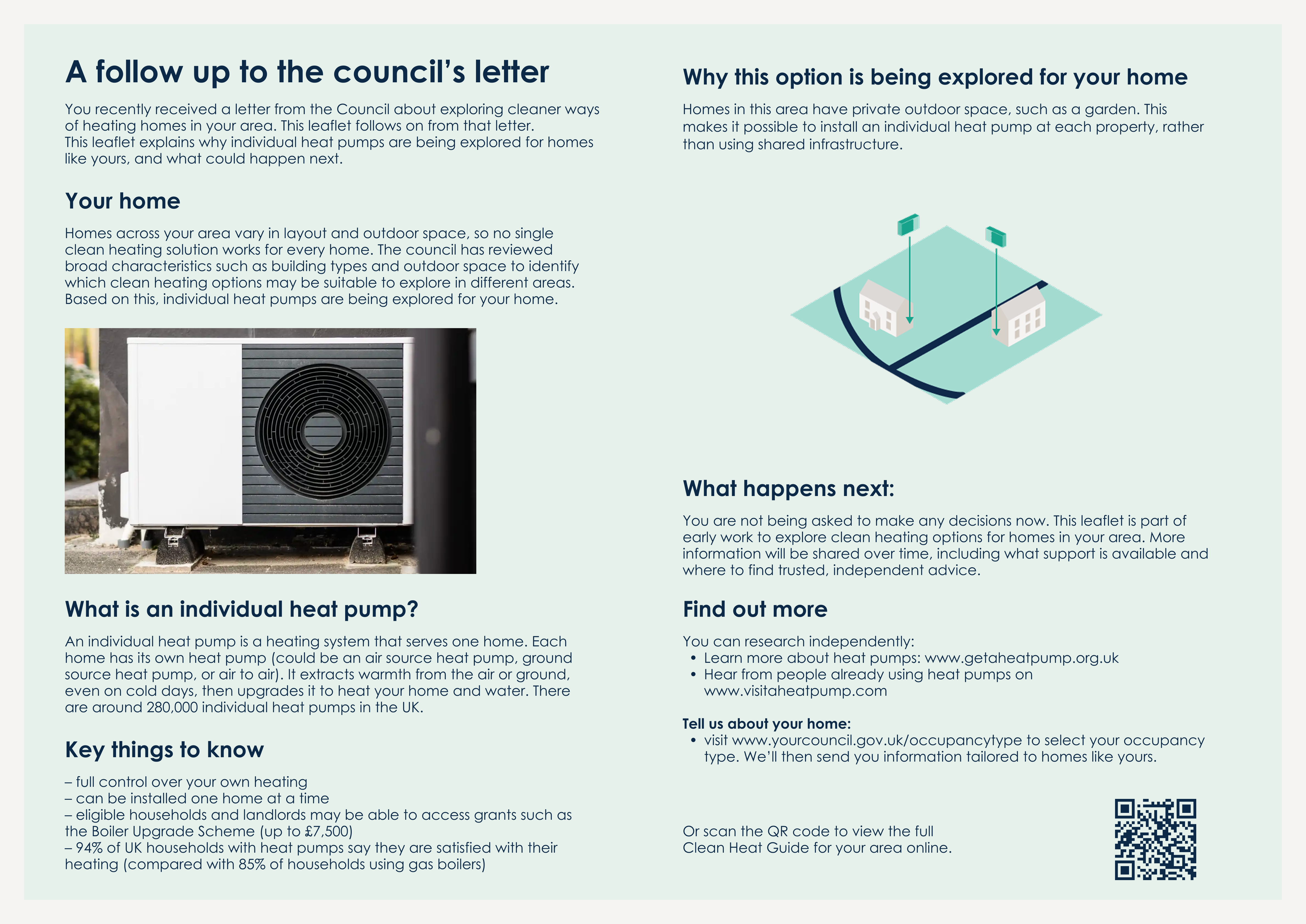
Leaflet example: individual heat sources
Illustrative prototype showing how this technology could be presented to households
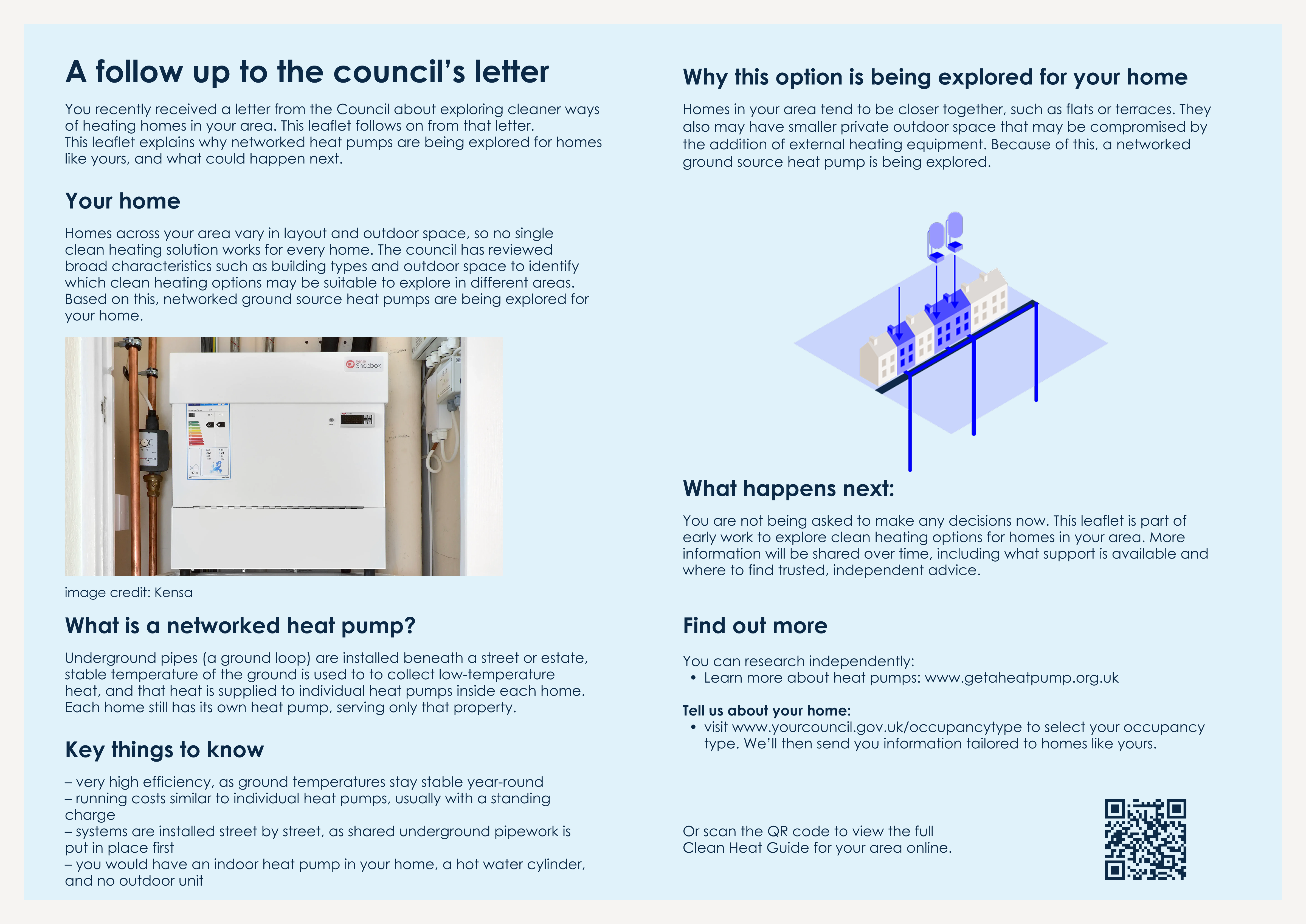
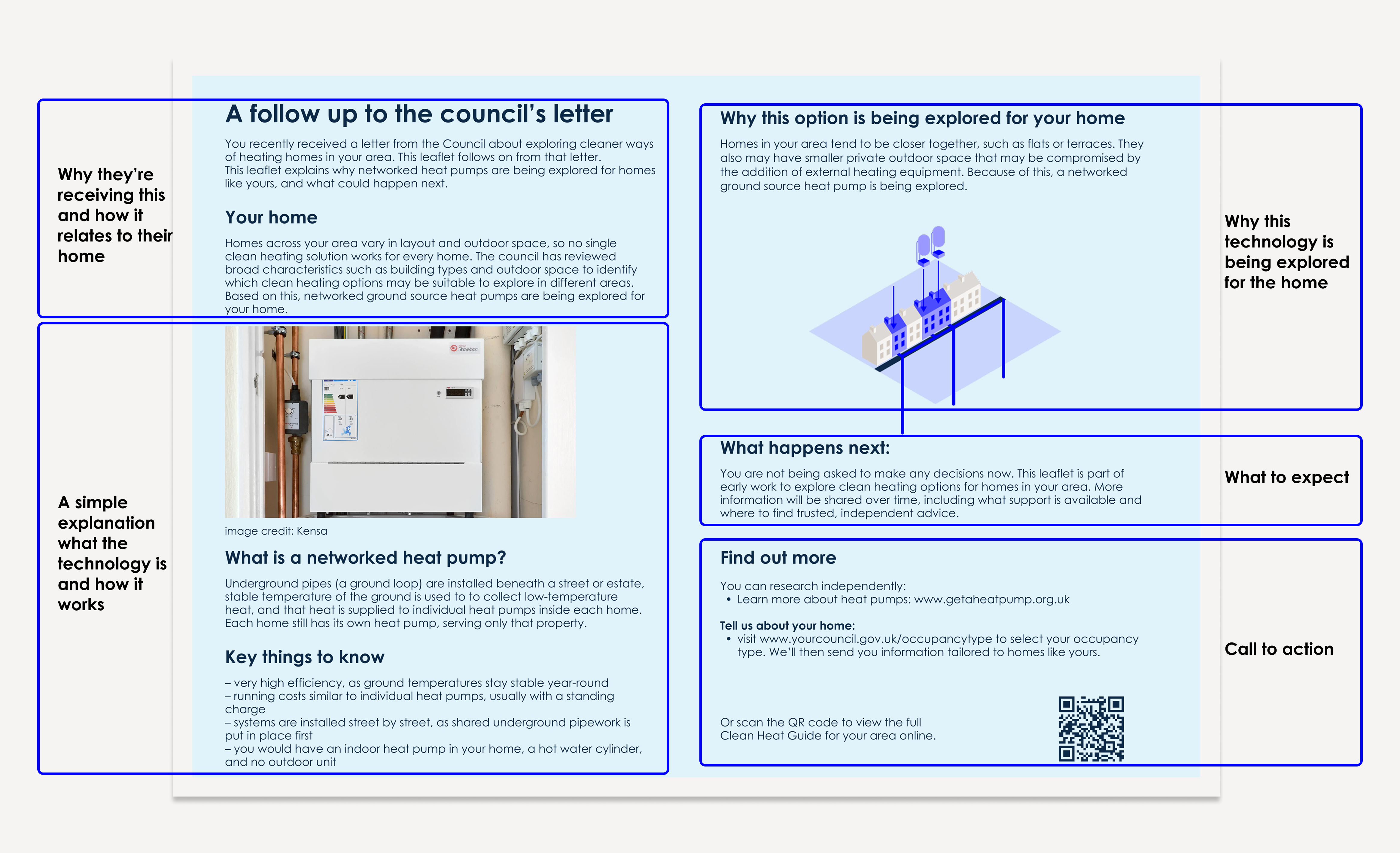
Leaflet example: networked heat pumps
Illustrative prototype showing how this technology could be presented to households
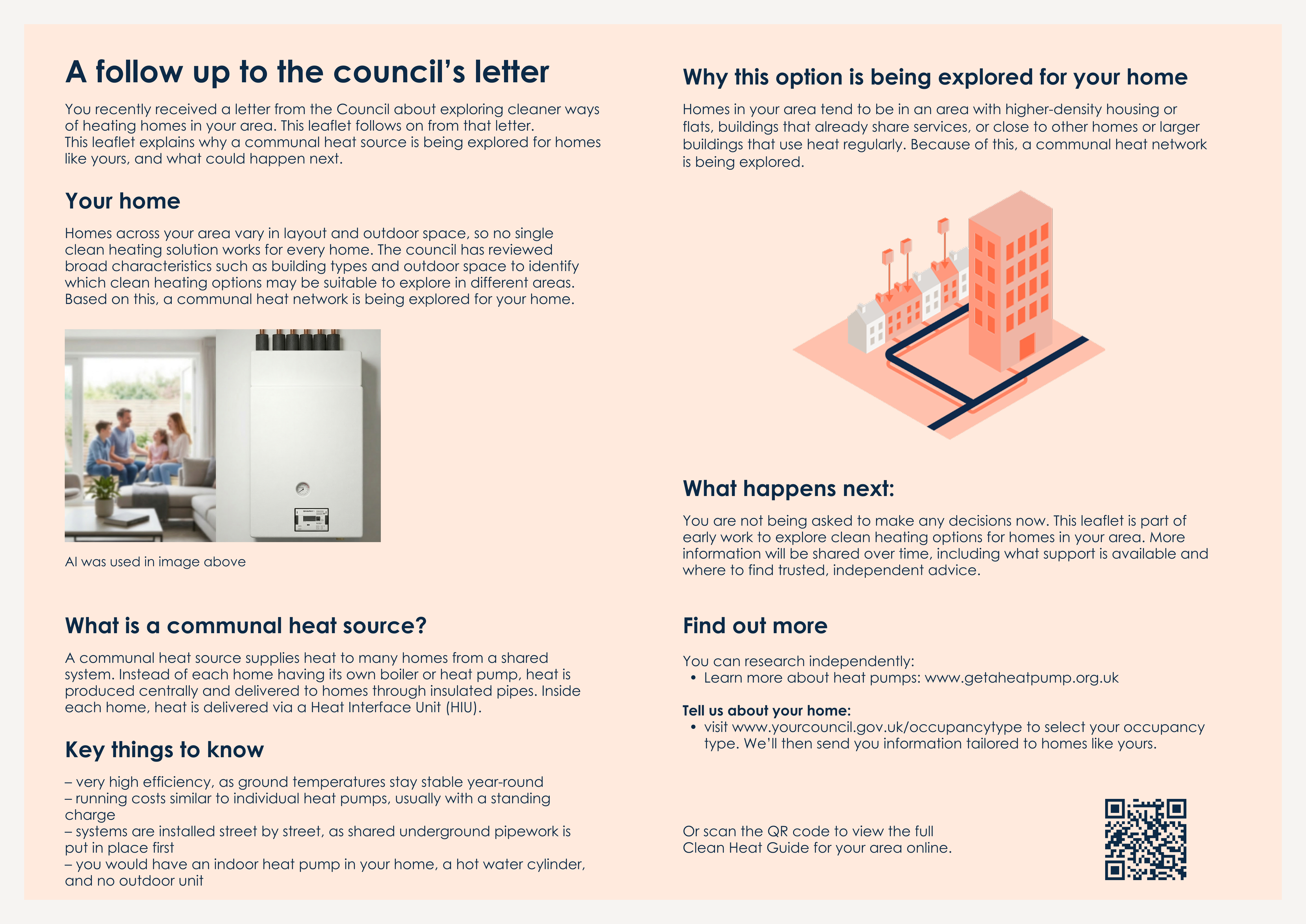
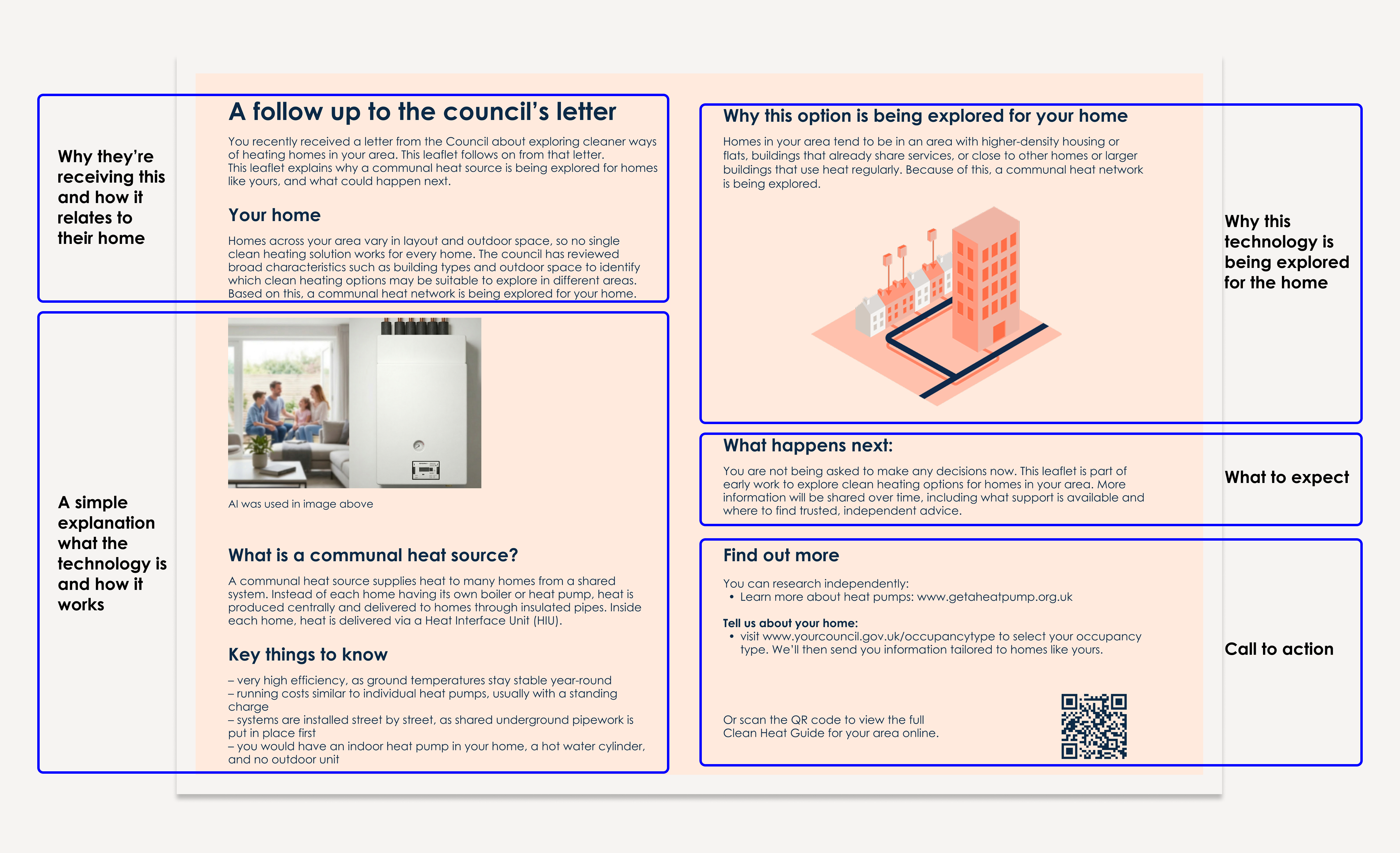
Leaflet example: communal heat sources
Illustrative prototype showing how this technology could be presented to households
Sign up to hear more
We are a building a network of areas, suppliers and community groups interested and working across low-carbon heat.
Sign up here if you would like to be notified about updates and opportunities to collaborate.