Household plan: letters guide
Recommendations on what to communicate in a letter sent to households
ALPHA
Overview
Aim: to provide an early, trusted and accessible explanation of why the work is happening and what it aims to achieve, before residents encounter more tailored information about their home.
A letter from the council reflects what residents expect - communication about clean heating should be visibly council-led.

This letter is sent to all households and provides shared context for the area. Unlike later leaflets, it is not personalised. Its role is to establish trust, explain intent, and introduce the transition before more specific information is provided.
What the letter should communicate
1
Who this is from
It should clearly state the work is council-led and explain why residents are receiving the information. The communication is positioned as part of an early, council-led initiative to explore future clean heating options for the area, rather than as a confirmed proposal for individual homes.
2
Why this conversation is happening now
This includes establishing why home heating matters in everyday life, including its links to comfort, health and household costs and explaining why the way we heat our homes is changing nationally and locally. The letter should describe the wider shift away from fossil fuels towards electric systems such as heat pumps, framed in terms that are relevant and understandable to residents.
3
Home and neighbourhood benefits
At a household level, this may include warmer homes, improved air quality and more predictable costs over time. At a neighbourhood level, this may include reduced local emissions, support for local skills and jobs and wider community benefit. It emphasises the council’s role in ensuring support, safety, oversight and suitability as the work develops.
4
What to expect
It should make clear that households are not being asked to make any decisions at this stage and that this is early exploratory work. Further information will follow over time, including information tailored to different types of homes and residents will continue to hear directly from the council as the work progresses.
5
Call to action
The letter explains where residents can find out more, including signposting to the online guide on the council’s website and to local advice services. It also provides straightforward routes for asking questions or seeking support if they wish.
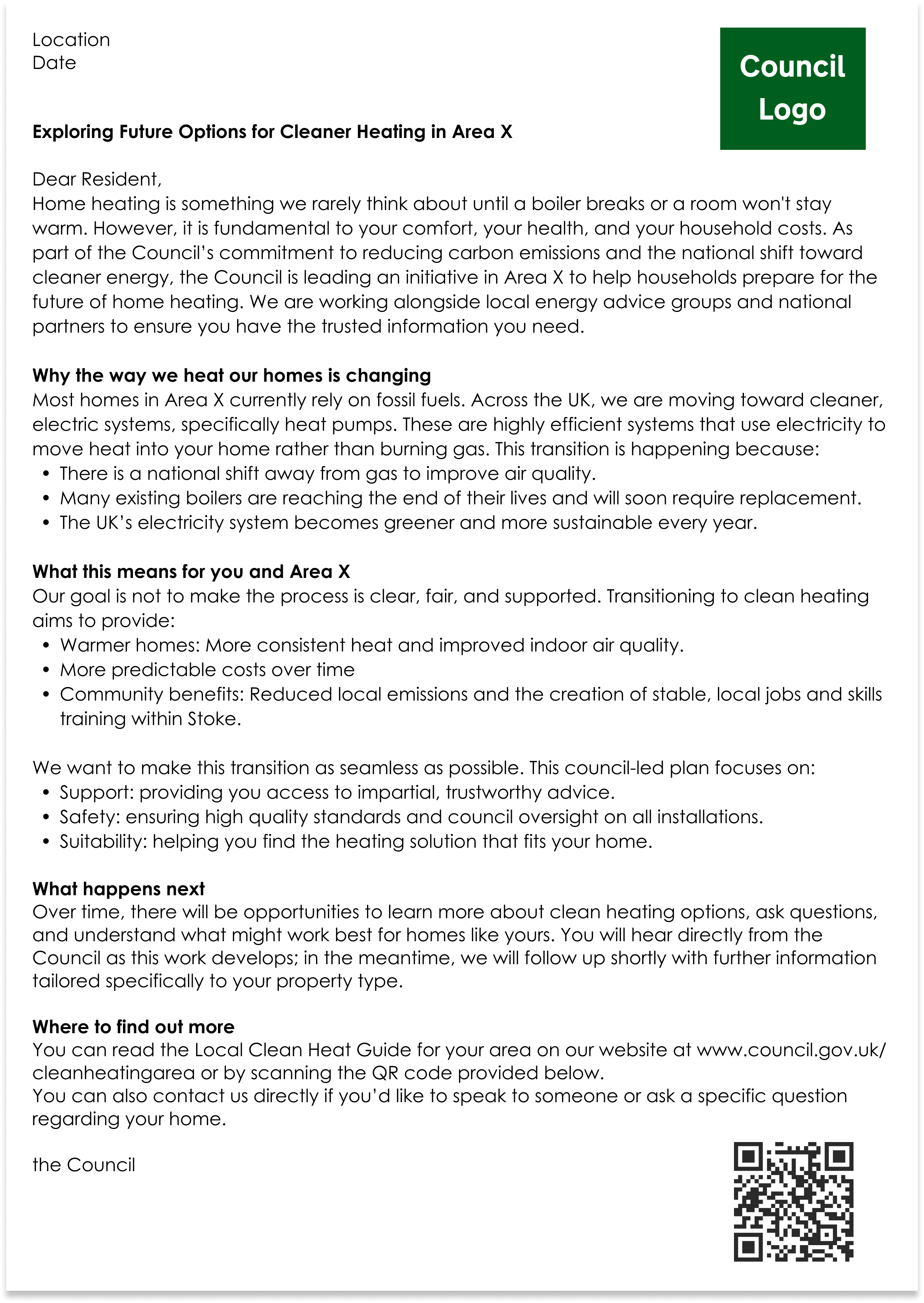
Example prototype
Illustrative prototype of an early council-led letter.
Sign up to hear more
We are a building a network of areas, suppliers and community groups interested and working across low-carbon heat.
Sign up here if you would like to be notified about updates and opportunities to collaborate.